Events

Past Events › Colloquium
November 2020
Panel Discussion: Dialectics without Synthesis

This Film and Media Studies/Carsey-Wolf Center Colloquium will feature Naoki Yamamoto’s recently published monograph, Dialectics without Synthesis: Japanese Film Theory and Realism in a Global Frame (UC Press, 2020). The monograph explores Japan’s active but previously unrecognized contributions to the global circulation of film theory during the first half of the Twentieth Century. It is in an attempt to break with our conventional treatment of “theory” as the exclusive domain of the West. The event will feature brief presentations by…
Find out more »December 2020
The Carceral Techno-Imaginary: Between Technological Seeing and Punishment in Black Mirror’s “White Bear” – Wendy Sung
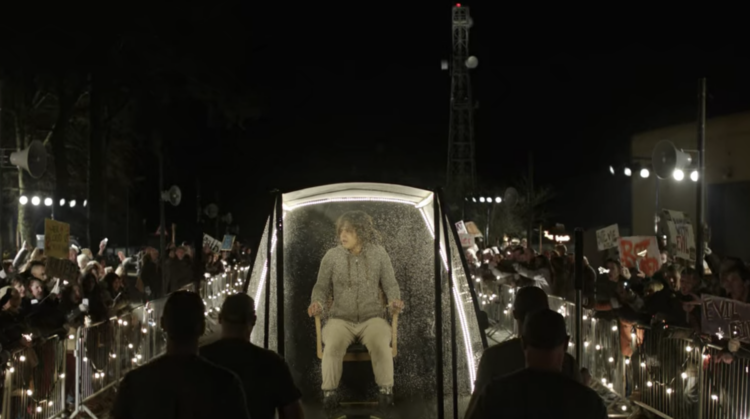
Using the Sandra Bland arrest as a dialogical space, this talk analyzes season 2's episode of Black Mirror, the British anthology TV series, known as “White Bear” (2013). By reference to this televisual media context, I seek to illuminate the failures of the technological rescue narrative by putting this show into conversation with the techno-dystopian carceral imagination alongside the realities of US post-slavery Blackness, technology, and racialized surveillance. The visual capture of racial violence by emerging visual technologies has often been praised as a…
Find out more »May 2021
Unmanning: A Roundtable – Katherine Chandler
Unmanning: How Humans, Machines and Media Perform Drone Warfare studies drone aircraft built and adopted by the United States military from 1936 to 1992, examining the prehistory of contemporary drone vision. It intervenes in media studies to show how the platform—long before the contemporary war on terror—used television, aerial photography and video to create a field of war. Detailing this prehistory, what emerges is a story of failure, the impossibility of seeing and the orchestrated performances that create an objective…
Find out more »November 2021
Notes toward an Environmental Film Aesthetics
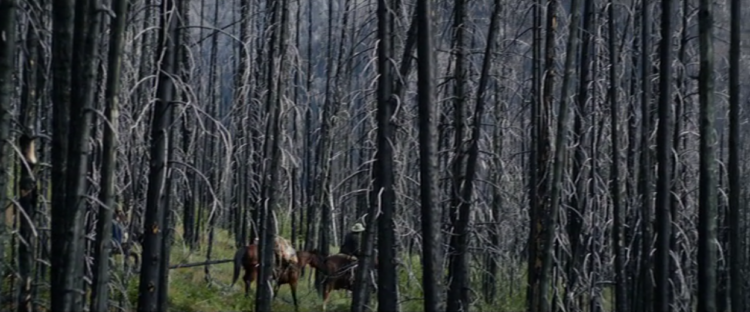
This paper presents some preliminary thoughts on environmental moving images, that is, moving images that only make sense if we read them as environments, or as provoking thought about environmentality as condition. Moving through conceptions of environmentality such as milieu, Umwelt, ecology, mood, and resonance, I turn to various examples from recent and not-so recent films, from Antonioni to drone footage to German art cinema, to discuss the role of moving images for reflecting on historically specific environmental condition(ing)s in…
Find out more »Digital Image as Material Object: Archaeologies of Computer Graphics – Jacob Gaboury, Dept. of Film & Media, University of California at Berkeley

The computer is not a visual medium. And yet computation as we know it today has been fundamentally shaped by computer graphics. It was the desire to make computation legible and accessible to human users that drove researchers to develop systems for graphical human-machine communication, and while visual representation is in no way essential to the theory of computing or the practice of procedural calculation, computer graphics played a significant role in the development of the computer as a technical…
Find out more »Film History and the Poetics of Dark Patrimony – Jennifer Wild
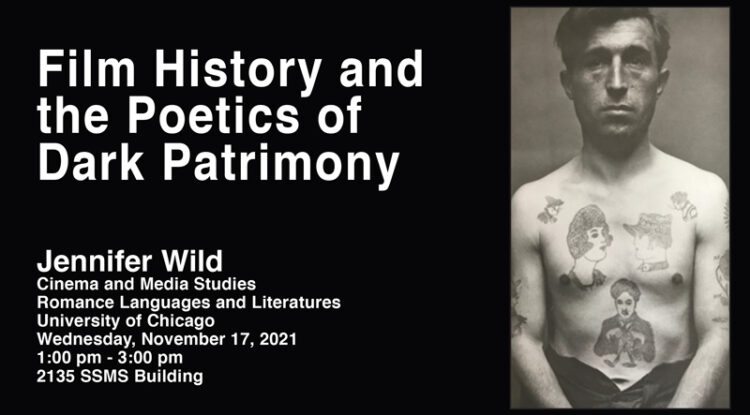
In a study of films from the 1930s belonging to what French filmmaker Jean Vigo called “social cinema,” this talk examines the concept of “dark patrimony” and some of its cinematic objects. Unlike traditional patrimonial objects, such as works of literature or art, those associated with dark patrimony do not bestow glory upon the French nation. They are nevertheless collected in museums, archives, and they also appear across French film history and arise visibly in Vigo’s classic work of Poetic…
Find out more »January 2022
The Image of Disaster: Image-Events, Spaces of Suffering, and the Anthropo(S)cene – Adrian Ivakhiv – University of Vermont’s Rubenstein School of Environment and Natural Resources
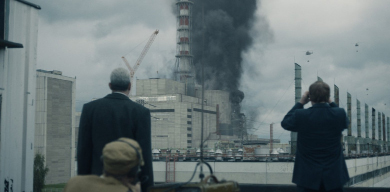
This talk takes its impetus from two trends unfolding around us: the ongoing “digitalization” of everyday life, as digital images, media, and data systems become increasingly intertwined with the management of human lives, desires, identities, and governance systems; and the growing recognition of an impending climate emergency, wherein ever larger populations of humans (and nonhumans) become subject to the instabilities brought about by climatic and ecological destabilization. What, if anything, might a linked analysis of these two trends contribute to…
Find out more »March 2022
Angels of Efficiency. A Media History of Consulting and Big Data – Florian Hoof, Leuphana University Lueneburg.
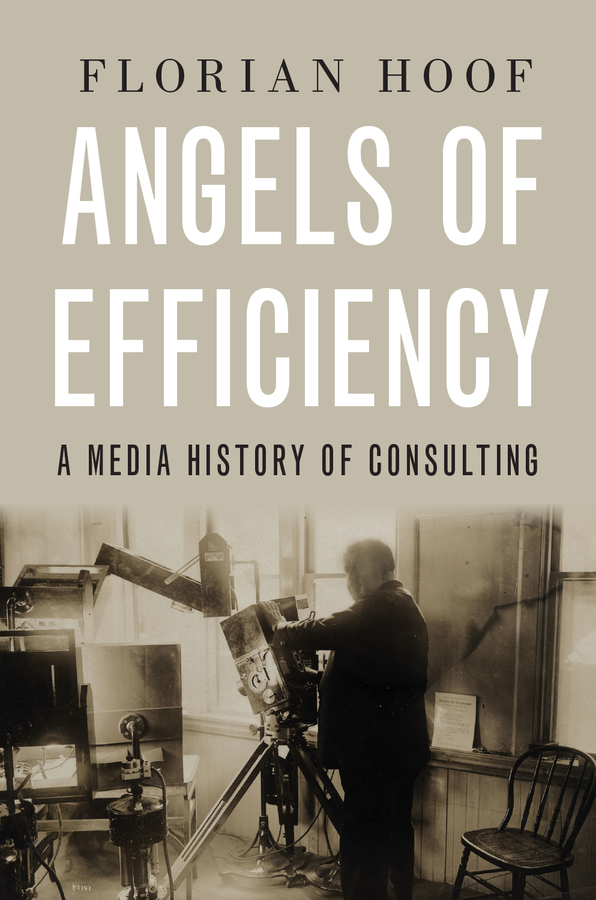
Corporate consulting, a one-time seemingly marvelous mixture of bare-knuckle rationalization, esoterica, and visionary futurism, is invariably deployed when business structures threaten to lose their equilibrium. What it actually means to be consulted, the part played by film and media in consulting, and how the branch of corporate consulting became a system of knowledge with such a socially important role is the object of this talk. It develops a new, interdisciplinary approach, situated between film, media and business history, media archeology,…
Find out more »April 2022
Magic lantern: seeing far, seeing self and other delights in Méliès’s Lanterne Magique, Hoffmann’s Rat Krespel and Offenbach’s Tales of Hoffmann – Gabriela Cruz, University of Michigan
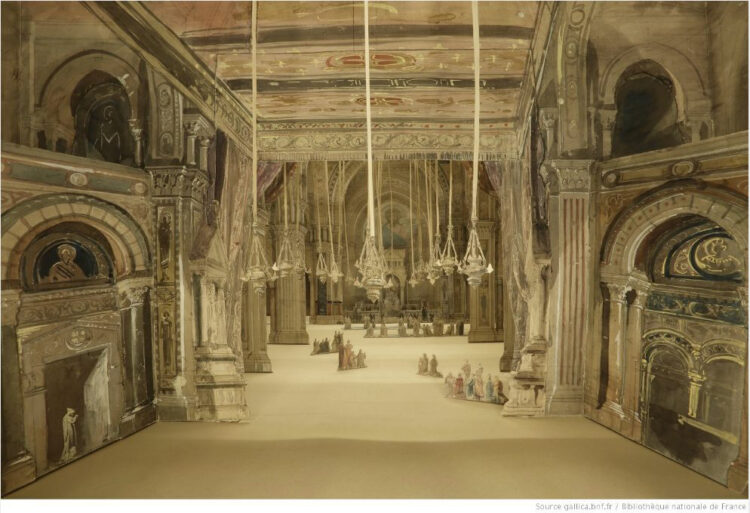
The stupendous impact of magic lantern technology on the imaginative labors of the romantic generation has long been recognized in scholarship about seeing and gazing. Less understood, however, is the mobilization of the apparatus for re-imagining voice, singing and song during the 19th-century. This presentation takes its point of departure from an eccentric assemblage of scenes from silent film, narrative, song and opera, read in kaleidoscopic manner for traces of sound and for the sense of how the magic lantern…
Find out more »